Can a Facebook friend list redraw a landscape?
A team led by Dr. Jabez Joshua M. Flores took one man’s Facebook network, 1,267 friends gathered since 2011, and asked which of those friendships were strong enough to carry permaculture from one garden to another. Fourteen were. Ten of them are drawn on a real map.

How does Facebook enable people to practise permaculture in real life? That is the first sentence of the study, and it came from scrolling. The lead researcher kept seeing photos of friends’ garden projects in his newsfeed, alongside the endless gardening memes and how-to posts that fill any permaculture group. With so much of daily life now documented online, he wondered how much of that activity translated into actual practice on actual land.
Permaculture is a design system conceptualised in Australia in the 1970s, and in the decades since it has spread mostly through social media, with universities arriving late to the conversation. Researchers have a name for knowledge that lives that way. They call it feral ecology, ecological discourse that escaped the academy and went to live with ordinary people. This study was an attempt to track a feral idea across a map.
In nature, a corridor is a strip of land
Landscape ecology, the branch of science that studies how the pieces of a landscape fit together, has a word for a thin band of habitat joining two larger patches of forest. It is a corridor. Seeds, birds, insects, and small animals travel along it, and because they travel, both patches stay alive. Cut the corridor and the patches slowly starve on their own.
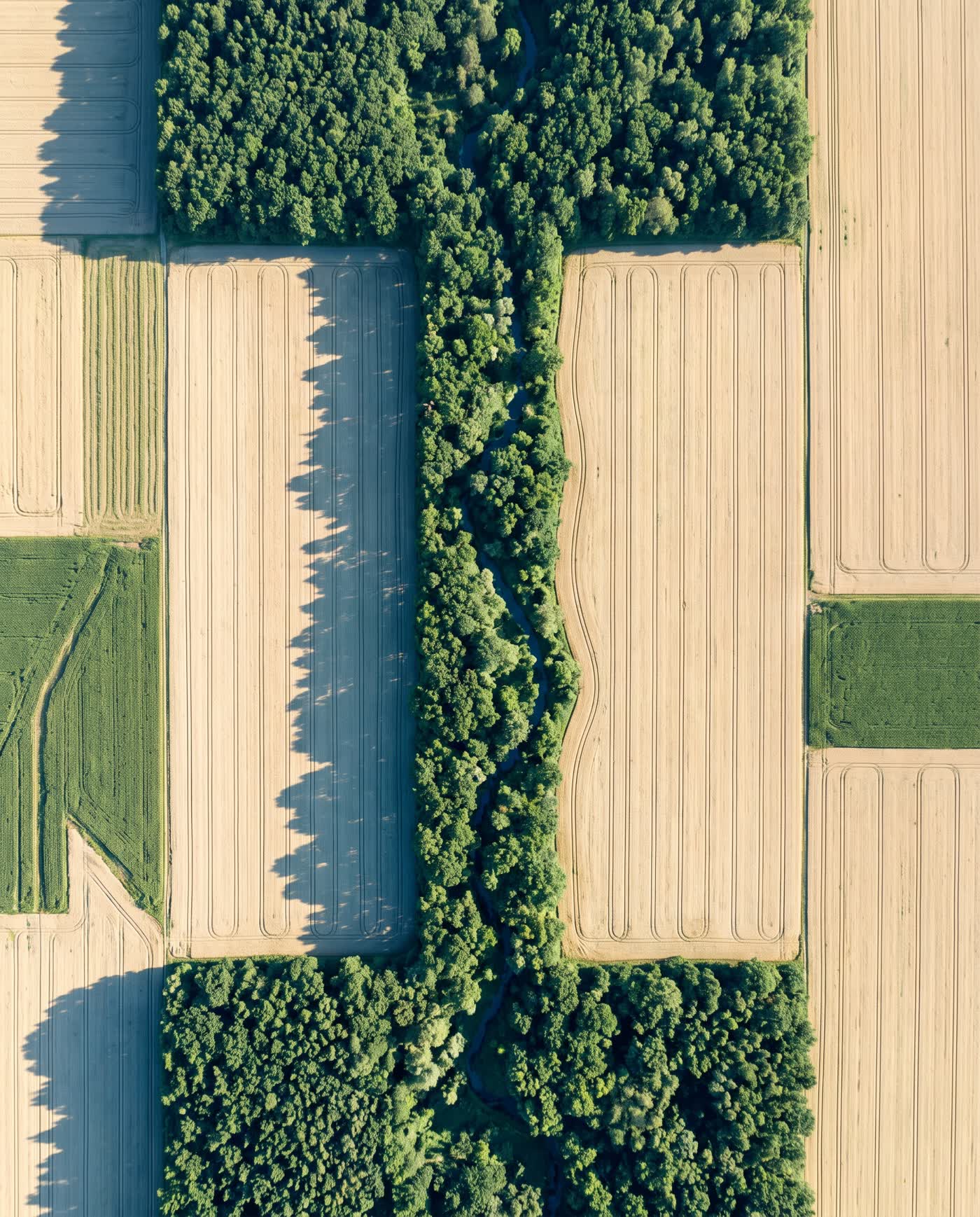
The team borrowed the idea and moved it online. They defined a virtual corridor as a friendship strong enough to carry permaculture itself, the knowledge and the practice, from one person’s land to another’s. You cannot walk it. It still moves things. And if the corridor is real, the two gardens at either end of it are the landscape patches it connects.
The study area was one man’s friend list
The terrain here was the lead researcher’s own Facebook account, a network he had been building since 2011. It held 1,267 people. Membership in eighteen permaculture-related Facebook groups narrowed that down to 286 people who might plausibly be carrying the practice. Each of them became a node, a single point in the network, and the researcher himself became the focal node at the centre, the point every line would be measured from.
How do you measure a friendship in soil?
The team built a score that did not exist before and called it Percentage Linkage Strength. It asks one question. How much permaculture actually travels down this connection? Forty percent of the answer comes from what happens online, and sixty percent comes from what exists on the ground. Those two halves have names of their own.
- Social Score
40 points - How alive the friendship is on Facebook. A script written in R, a programming language built for statistics, pulled every like and every comment the person left on the researcher’s account between September 2012 and January 2016. Shared group membership was measured on the Bogardus social distance scale, a psychology tool from the 1920s that gauges how close one person is willing to let another come.
- Permaculture Score
60 points - Whether anything grows. Keeping a real permaculture project earned 35 points. Having attended a training earned 25. The gap was deliberate. A garden that exists counts for more than any amount of talking about gardens.

Being loud online got you nowhere
To qualify as a corridor, a person needed at least 30 of the 40 social points and 75 out of 100 overall. Run the arithmetic and something kind happens. Someone posting constantly with nothing planted could reach 40 at most. Someone with a project and training but no online presence topped out at 71. Only a person who was both active online and growing something in the ground could cross the line. The maths quietly refused to reward performance.

Out of 286 people, only fourteen made it
Across the top ten that works out to roughly nine likes and one and a half comments a month. Nothing viral. The groups they shared most were Good Food Community and the Philippine Permaculture Association.
Every one of the ten had a permaculture project running on real land, mostly home gardens. Every one had sat in a training room beside the researcher at least once. They were young organic farmers, urban gardeners, entrepreneurs, advocates, a student, and a musician, spread across Laguna, Metro Manila, Rizal, Pampanga, and Nueva Ecija. The network moving permaculture across Luzon was built out of backyards.
Then they watched the network grow, year by year
The team drew the top ten as a sociogram, a diagram of who is linked to whom, using a tool called Meerkat Lite from the University of Alberta. Eleven nodes and thirteen edges. Then they did something a journal paper almost never does. They animated it.
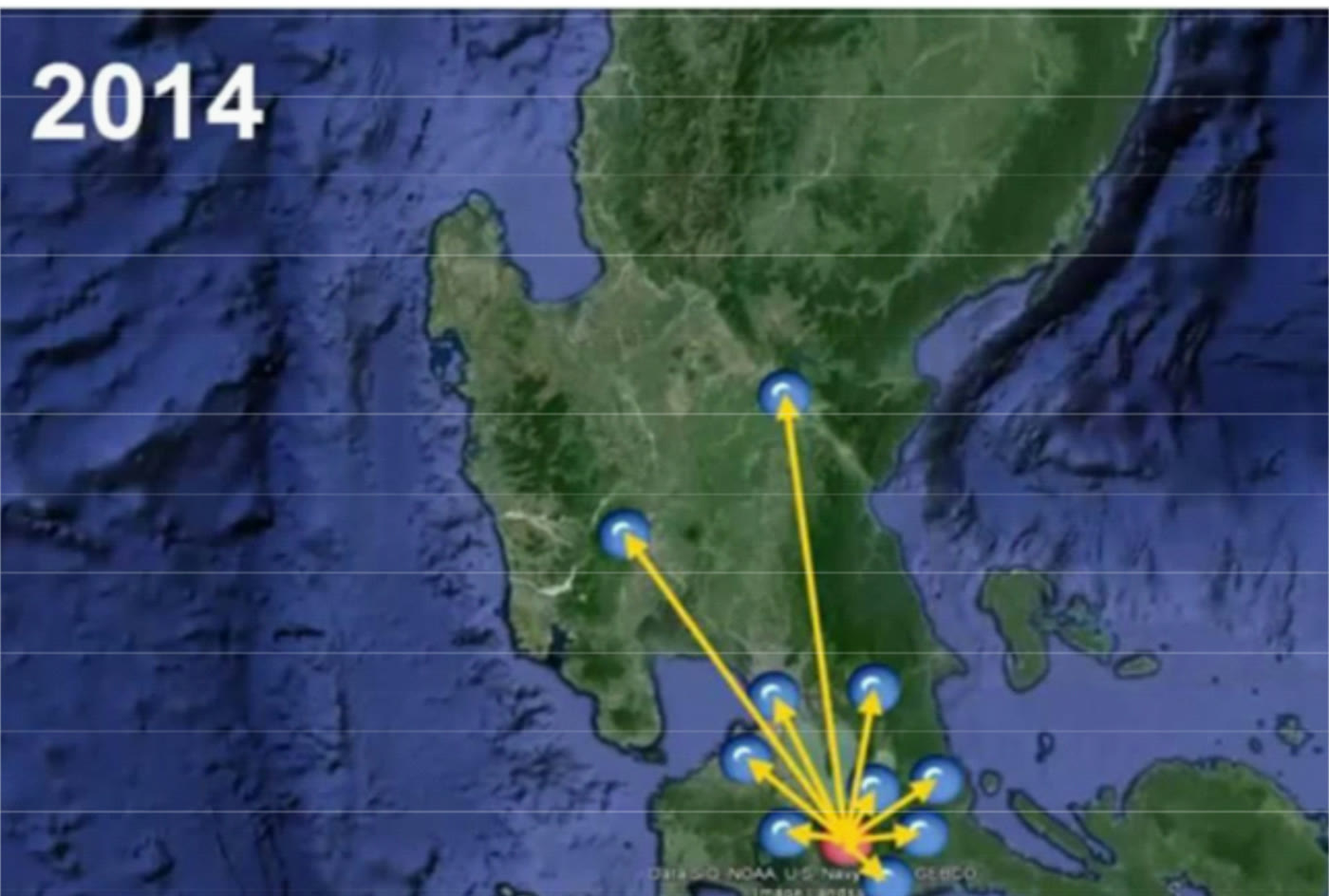
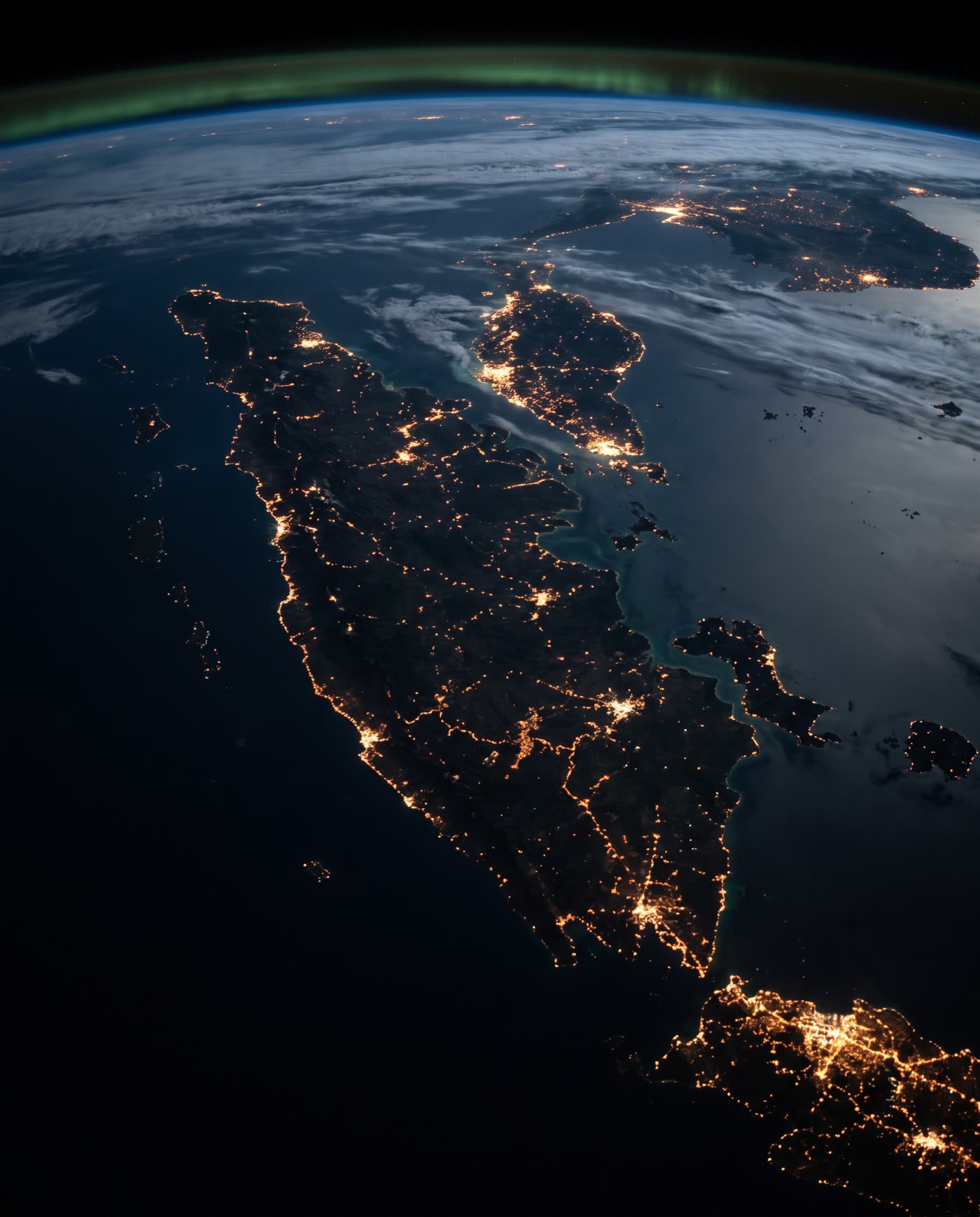
Using Google Earth they pinned all 286 people to their provinces, since Facebook only shares location down to that level, and let the years run from 2011 to 2016. Clusters bloomed across the Philippine map as each friendship formed. Then the top ten lit up, joined to the focal node by lines. The camera dropped into each one, and what surfaced was a photograph of that person’s actual garden. The whole sequence was cut together in Camtasia Studio.
They ran the whole thing a thousand times
The last step was a simulation in NetLogo, a program built for modelling how simple rules play out across many agents at once. The team used its rumour mill model, which treats an idea like a rumour passing from neighbour to neighbour one step at a time, and ran it a thousand times with a year as each step.
In the runs that let the rumour reach more neighbours at once, awareness climbed to 83 percent by the second year. Practice still crawled. Hearing about something and doing it turned out to be very different problems, and only the second one builds a corridor.
A method for finding the gardens
The paper suggests two uses for the method. Researchers could use it to find study sites for permaculture work, since every corridor points at a real patch of land. Practitioners could use it to see how a scatter of individual gardens might add up to landscape-scale change, the kind of effect no single backyard can produce alone. It also comes with a hopeful note. Any discovered node can become a focal node itself, with its own friend list to measure. The corridors keep branching.
For Mycelium the finding lands close to home. Our whole reason for existing is to connect scattered permaculture knowledge into paths people can follow, and here is a study showing that those paths already exist between Filipino gardeners. They are only invisible until someone measures them.
Flores, J. J. M., Obrero, R. J., Gelisan, L. A., Foronda, E. A., & Mendiola, R. L. (2017). Creating virtual corridors: Social network discovery and landscape patch connectivity of permaculture projects and initiatives on Facebook. International Journal on Open and Distance e-Learning, 3(2), 13–37. https://ijodel.upou.edu.ph/ijodel/article/view/22
APA 7th edition
What does this look like where you live?
Bring what you noticed in this study to the community. Answer a few statements, find who thinks like you, and decide together.
Join the conversation