Explore essential tools, templates, and references for sustainable living
Baganihan Reports Communities face rising uncertainty from climate, the economy, and global instability, yet the effects land locally. This first report is a guide to seeing change early, strengthening what a community already has, and deciding together through systems thinking and Community Continuity Management.
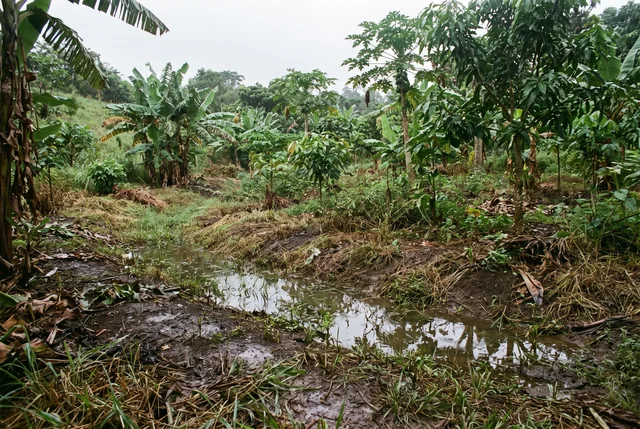
Two UP researchers spent three months on twelve Filipino farms asking seventeen practitioners what permaculture means to them. Three different answers came back, and each one showed up in the shape of the land.
Can a Facebook friendship carry permaculture from one garden to another? A UP Open University team scored 286 connections and found fourteen strong enough to count as living corridors across Luzon.
A full-day parent-child learning journey in permaculture gardening and primitive pottery, hosted by Baganihan Collective at Pacita Organic Garden.
Permaculture gets thrown around a lot, but rarely explained well. It is not just organic gardening. It is a design system that applies to backyards, communities, and entire ways of living.
Understanding permaculture and knowing what to do with that knowledge is equally important. How to read your space, what to prioritize first, and what you can realistically start in a week.
These are the thinking tools behind every permaculture decision. Systems Thinking — how to read your space, what to prioritize.
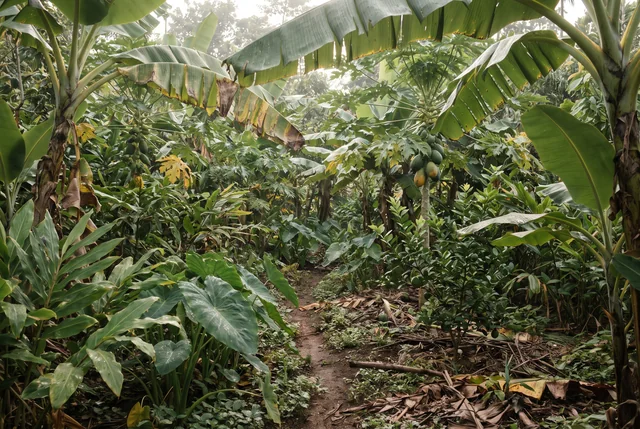
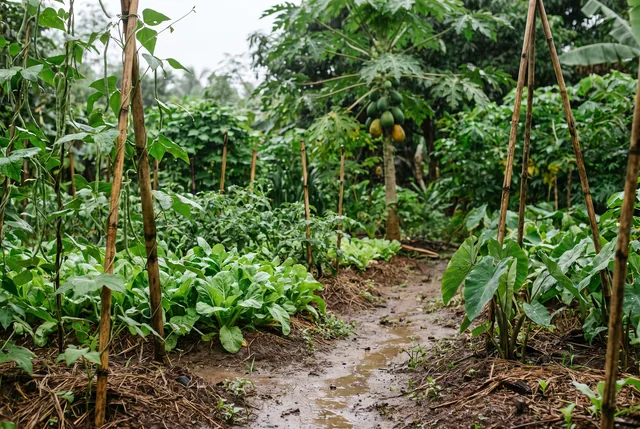
A food forest is a working, layered ecosystem that produces food and largely takes care of itself. If you want to see what all the concepts look like in practice, start here.
Overview of ecosystem restoration through water capture, soil health, and biodiversity enhancement. By applying permaculture ethics, we can encourage individuals rather than institutions.