Community Event · June 25, 2026
Kabuohan Workshop
Permaculture Gardening and Primitive Pottery for Homeschool Families
Permaculture Gardening and Primitive Pottery for Homeschool Families
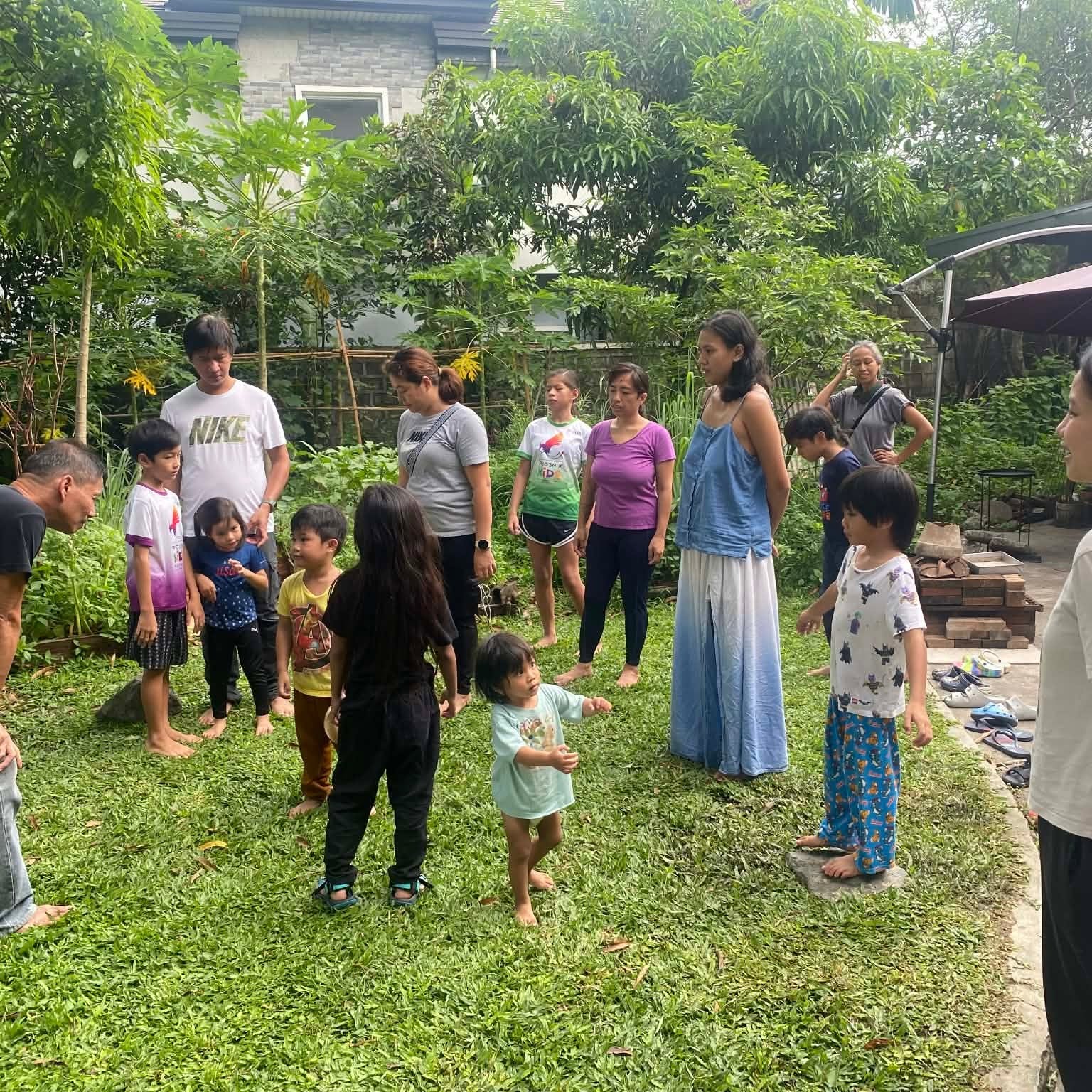
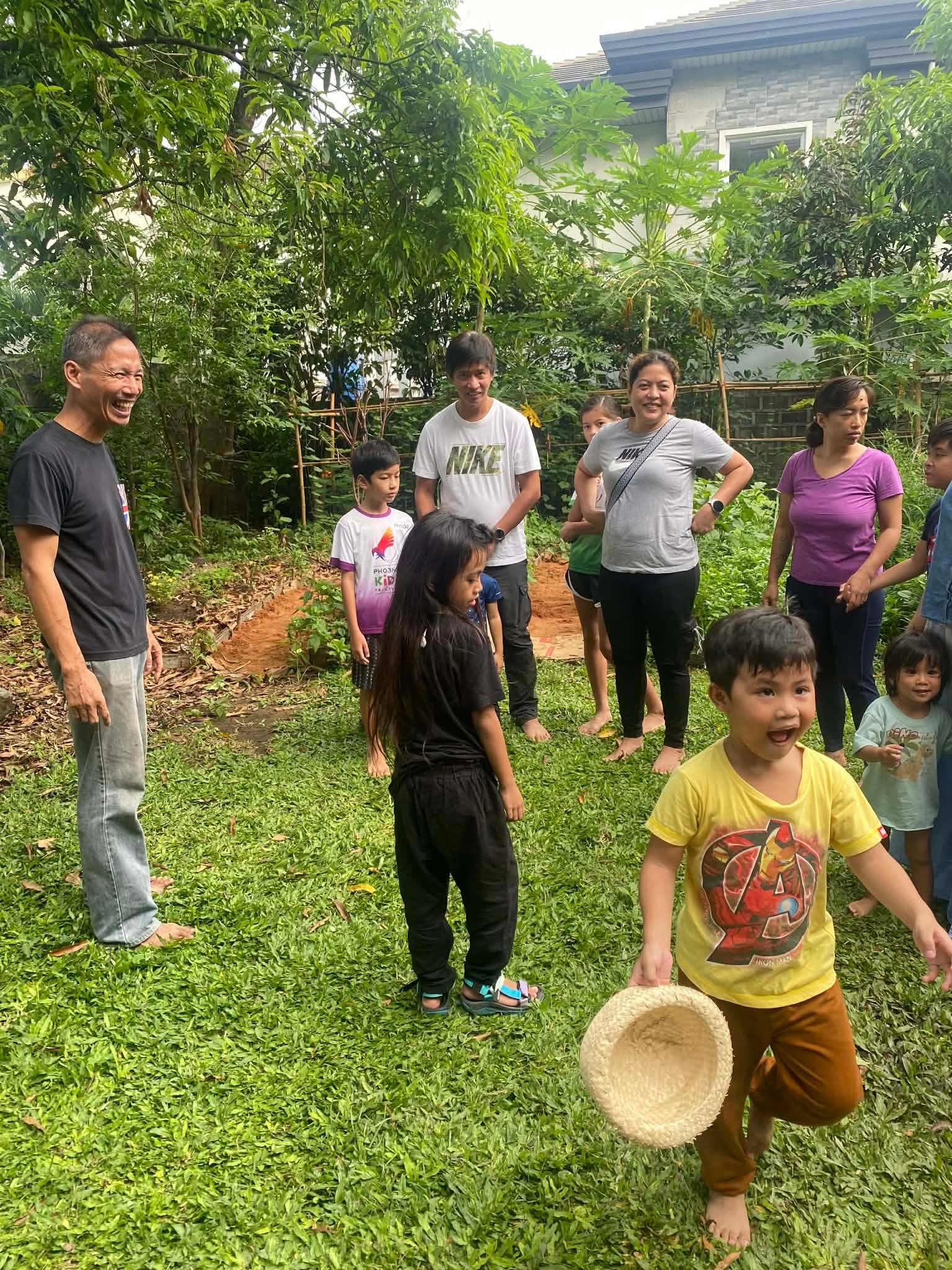
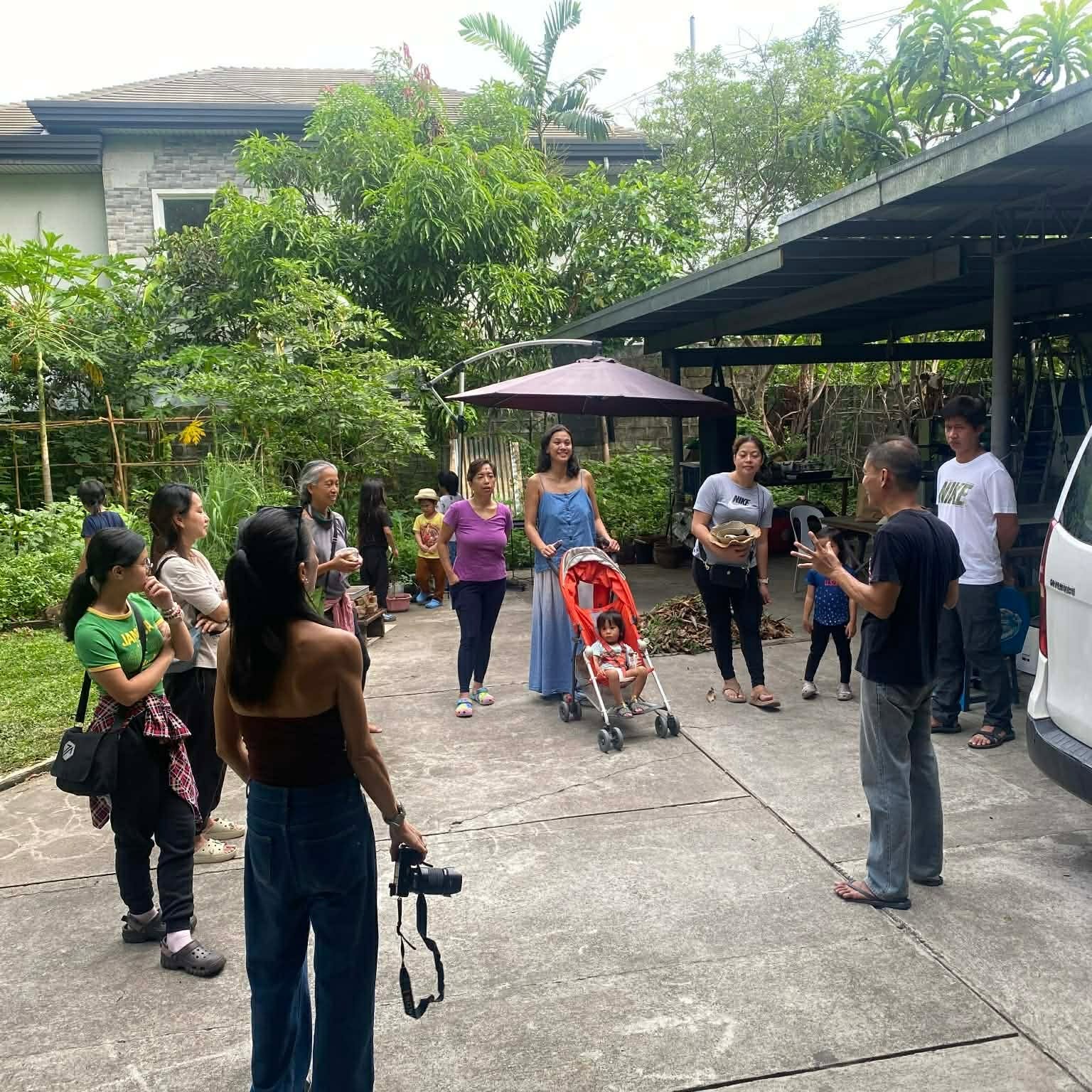
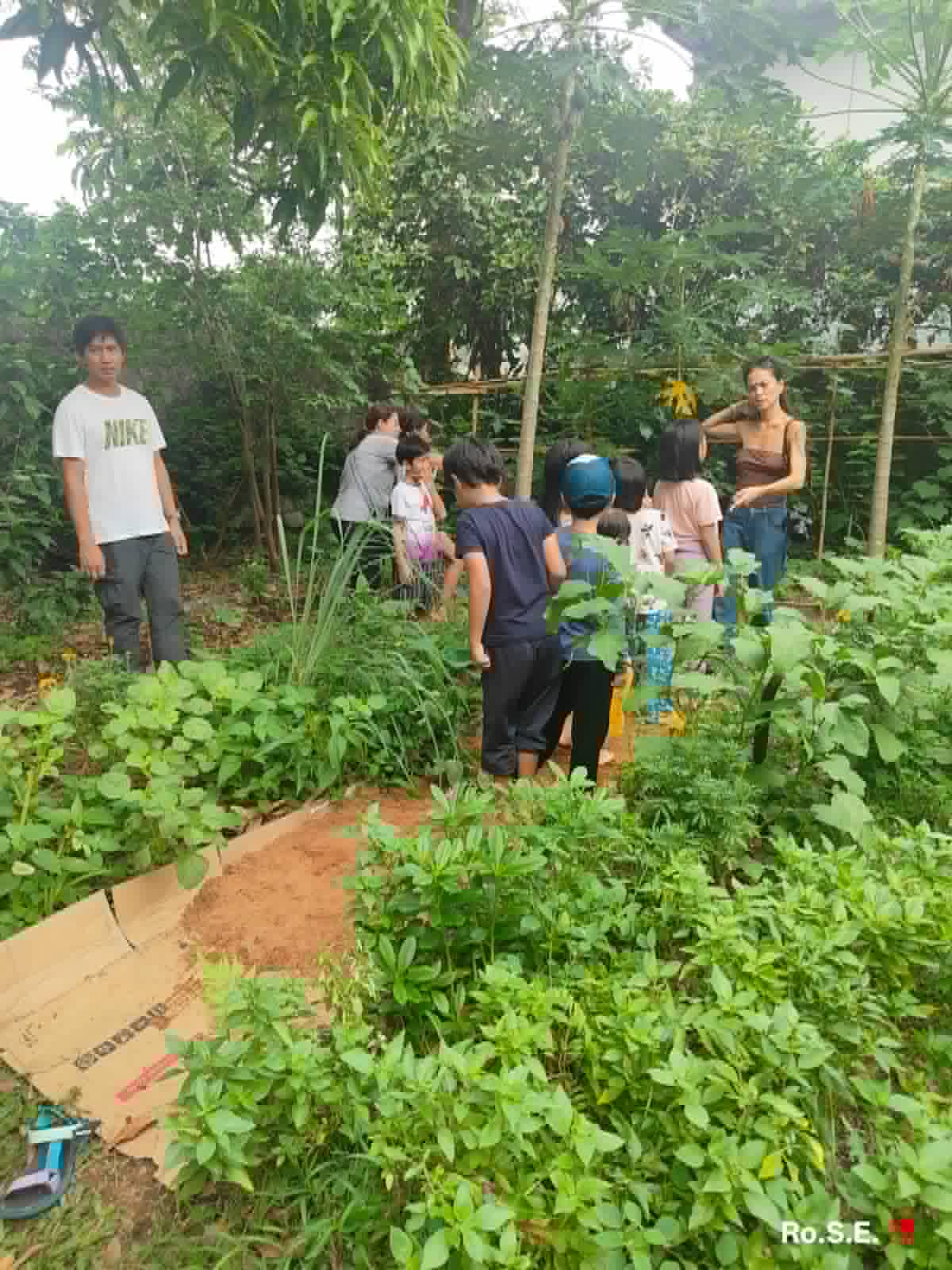
Hubert gathered homeschool families at Rizal Art House last June 25. Not to lecture about permaculture. To live it for a day.
It started with a question: "What living thing did you notice on your way here?" Parents and children answered equally. Then everyone took off their shoes. They walked the soil, smelled the air, touched leaves and bark. Hubert did not explain anything. Just: "What do you notice?" In permaculture, this has a name. Observe and interact. The garden speaks first. You listen before you act.
Parent-child teams spread across the grounds with a simple task: find something growing well, something struggling, an insect, a moist area, a dry area, something beautiful, something surprising. They gathered, shared, and asked why. What patterns are you seeing?
Then the families designed their own food forests. Sticks, stones, leaves, seeds, cardboard. One rule: design a place where people thrive, plants thrive, insects thrive, and soil thrives. Not one. All of them. That is permaculture design thinking held in a child's hands. Integrate rather than segregate. Every element in relationship with every other.
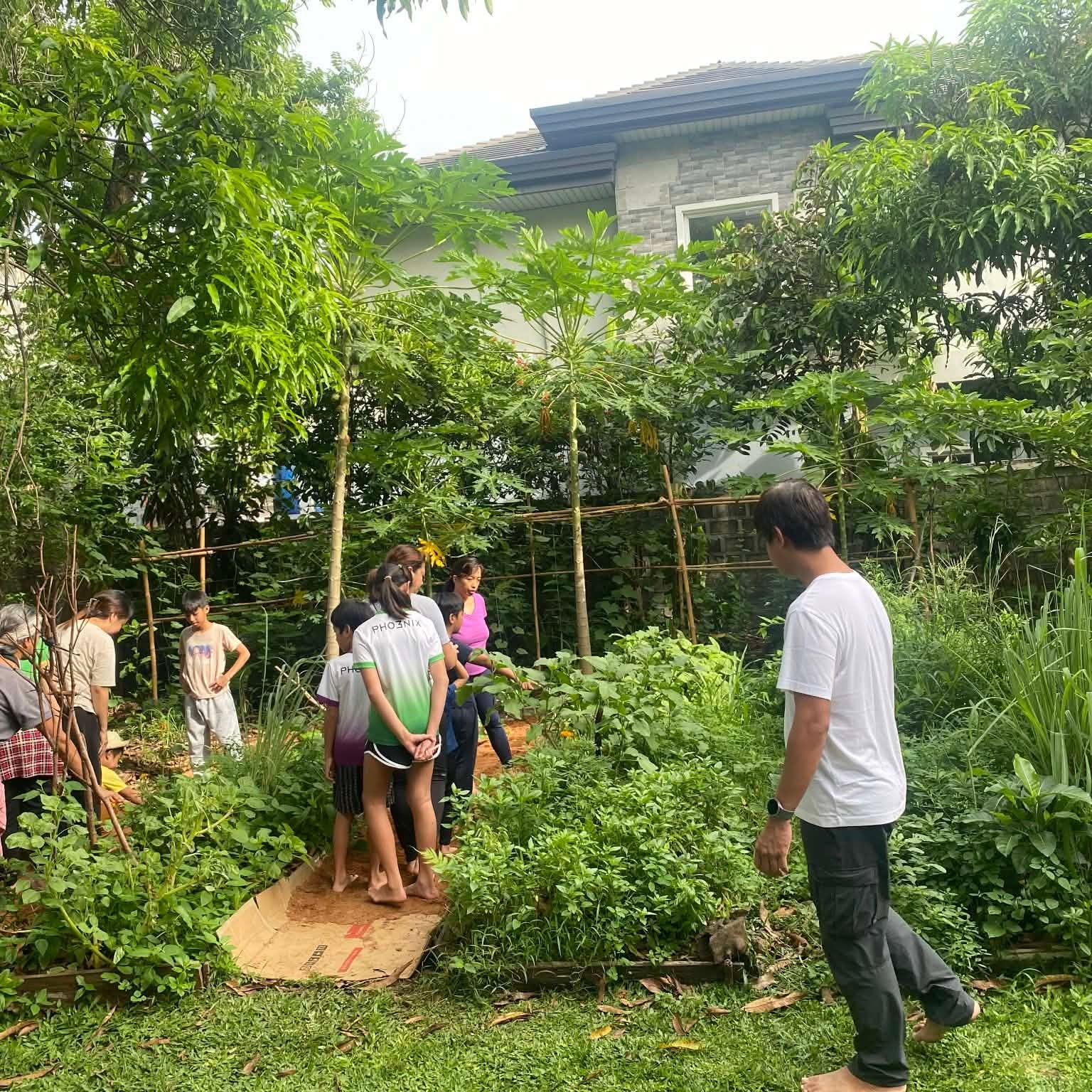
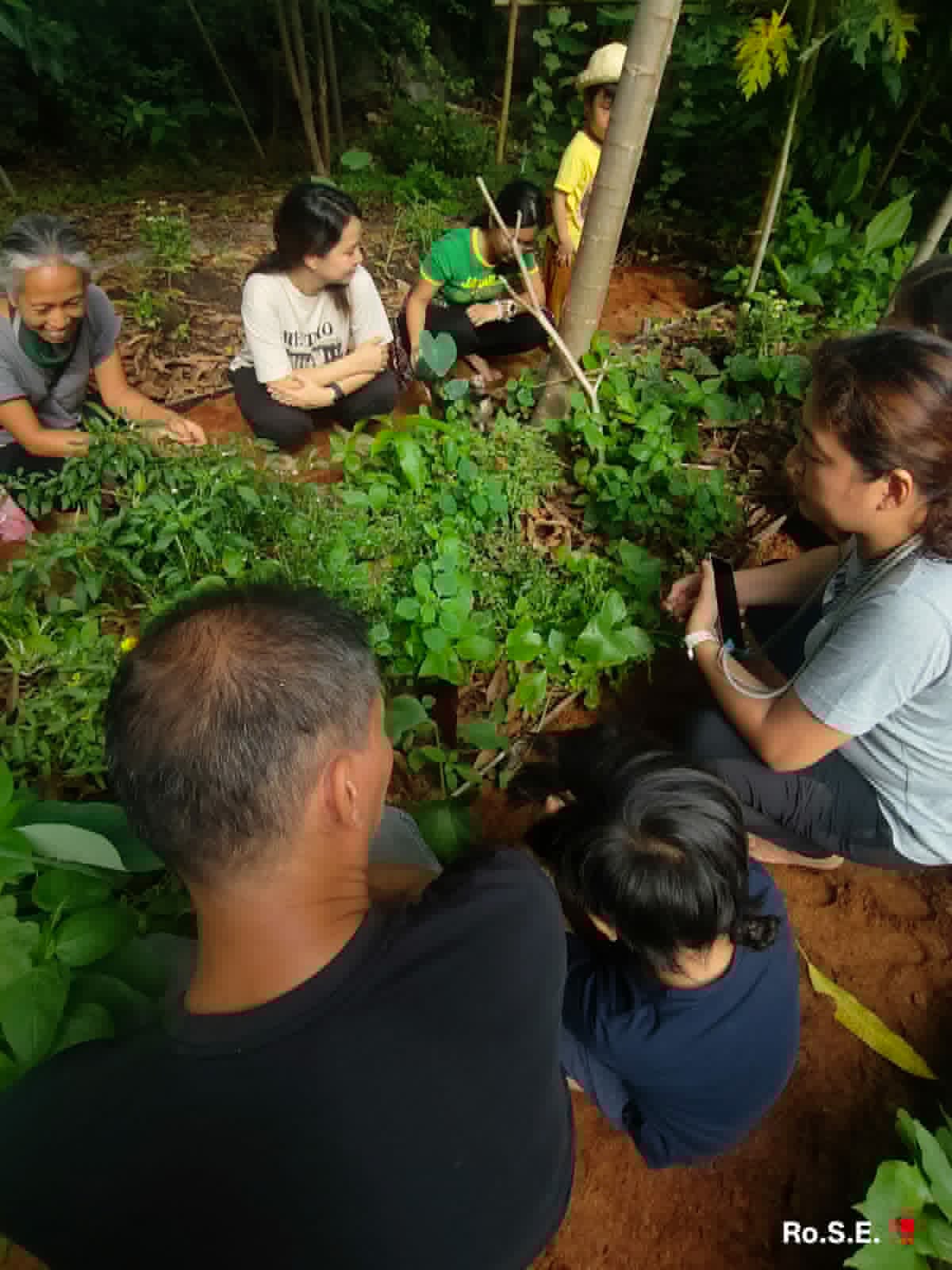
In the afternoon they built a real hugelkultur bed together. Wood layered with organic matter, covered with soil, watered, planted. Hubert asked what they had used. Soil, water, wood, leaves. Then: "Which of these did humans invent?" None. Gardening, he said, is collaboration with nature. The wood inside the bed would decompose. The decomposition would feed the soil. The soil would feed the plants. Decomposition is transformation. The bed was already full of hidden communities: fungi, bacteria, insects, earthworms, and roots, all working together unseen.
The afternoon moved to clay. Same earth, different form. The children held it, smelled it, squeezed it. Humans did not invent clay. Humans entered into relationship with clay. Families shaped pinch pots, seed bowls, animal figures.
The closing circle asked one final question: "After today, where do you think nature is?"
The children had spent time with the garden and the earth, learned from them, and discovered they were part of a larger living whole. Plants, soil, rain, insects, clay, people, and communities all exist through relationships. When we care for those relationships, life flourishes.
Kaginhawaan. Ease. Well-being. Right relationship with the living world. The workshop did not explain it. It let you feel it.
"We are not separate from the living world. We are participants in it. The same Earth that grows food also becomes clay, forests, homes, and eventually us. To care for the Earth is to care for ourselves and one another."
Closing reflection, Kabuohan Workshop · June 25, 2026
Workshop by Baganihan Collective · Held at Rizal Art House · Photos by Ro.S.E.